Landscape
Landscape & Path Lighting
Low-voltage uplighting for palms and architecture, path lights that mark the walk without runway glare.

Outdoor lighting on the Gulf Coast has one extra job: surviving here. We install landscape, path, security, and lanai lighting with coastal-rated fixtures and weatherproof connections, from Sarasota to Marco Island.
Salt air eats cheap fixtures. Within a mile of the water, standard aluminum and coated-steel fixtures corrode in a few seasons. We spec brass, copper, and marine-grade stainless where the location calls for it, seal every connection, and run low-voltage systems on transformers with proper timers and photocells so the system runs itself.
Low-voltage uplighting for palms and architecture, path lights that mark the walk without runway glare.
Motion-activated floods and dusk-to-dawn coverage positioned to cover approaches, not blind the neighbors.
Clean downlighting built into the soffits for curb appeal that also lights entries and driveways.
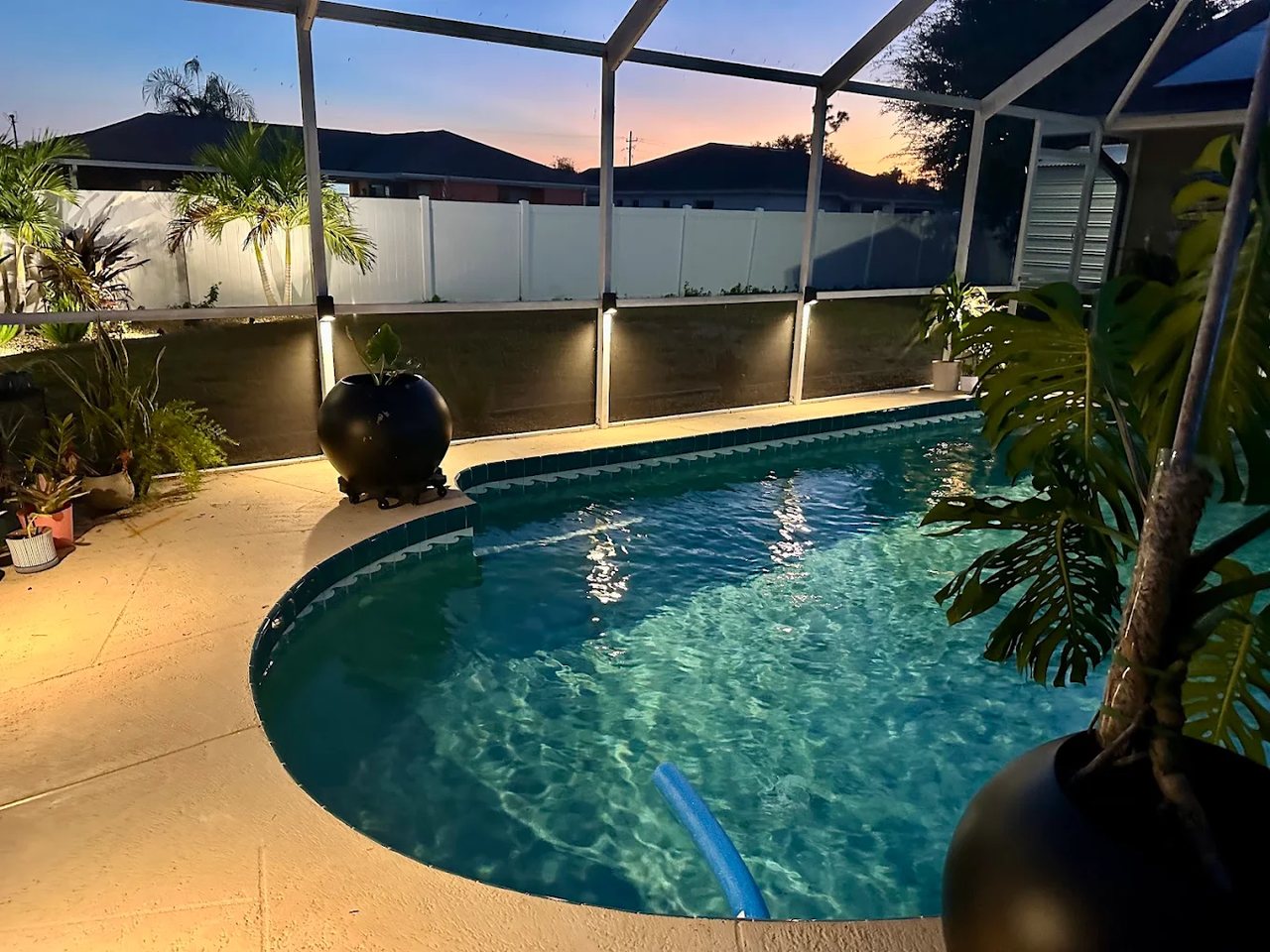
Wet-rated lighting for lanais and pool cages, wired and bonded to code around water.
Lighting for docks and seawalls with marine-grade equipment and GFCI protection throughout.
Photocells, astronomical timers, and app control so the lights come on at dusk without you thinking about it.
The best outdoor lighting plans start after dark. We walk the property and mark what should be lit and what should stay dark.
Fixture selection, transformer sizing, and a written price. Coastal-rated equipment specced where the location needs it.
Buried runs, sealed connections, fixtures set and aimed.
We come back after dark, aim every fixture, and set the timers.
Every job of this type includes the following as standard, not as an upsell.
Send the details and we will come back with a written price. No obligation, no hidden fees, and the license number is on every quote.
Brass, copper, and marine-grade stainless. Near the water, standard aluminum and painted-steel fixtures corrode fast. We spec coastal-rated equipment for beachfront and canal-front properties as standard practice.
Low-voltage covers most landscape work: safer around irrigation and digging, easier to adjust, and cheaper to run. Line-voltage still makes sense for large floods and long runs. We quote whichever fits the job, and say why.
Yes. Anything around a pool has specific code requirements for wet-rated fixtures, GFCI protection, and bonding. That is exactly the kind of work that should be done by a licensed electrician, and it is routine for us.
Not the way we build them. Modern LED landscape systems typically draw less than a couple hundred watts for a whole yard, and timers or photocells keep them off when they are not needed.